Parasites! 'orrible critters
This extended page is, in effect, a miniature but easy-going textbook. If you want to be well informed, read it all!
WHIP WORM (Trichuris species)
So-called because these intestinal worms look like little whips, around 1- 2" long. Its spread is favoured by poor sanitation and a warm moist climate. In parts of southeastern USA, 25- 30% of the population, mainly children, are infected, so it is not rare in Western society. Whip worms suck blood from the intestinal lining and can cause anaemia and damage to the gut wall leads to leaky gut syndrome, with resultant food allergies. Infestation can result in colitis, proctitis, appendicitis and in extreme cases prolapse of the rectum.
You may never have heard of this unpleasant human pathogen, yet you may be harbouring it, even as you read this. Amongst other symptoms of infection are insomnia, nervousness, loss of appetite, vomiting, urticaria (hives), prolonged diarrhea, constipation, flatulence and feeling "toxic" (Schmidt GD, Roberts LS, Foundations of Parasitology, Times Mirror/Mosby College Publishing, St. Louis, 1989, p. 418).
It is vital that the reader understand the wide variety of conditions that can present due to parasitic infections. Whip worms in the liver can wreak so much damage that a toxic overload is created by the liver’s inability to function normally. Thus environmental chemicals triggers can be apparent that are, in reality, the result of infestation, rather than chemical intoxication.
Nobody is safe
I introduce this beast as a way of making the point that many parasitic diseases masquerade as allergy and environment illnesses. Doctors so rarely think of parasites as a cause of trouble, yet only by constantly including them as a differential diagnosis will they be checked for and diagnosed correctly.
Parasites are bad news for humans. Of the 7.8 billion acres of potential arable land on Earth, only 3.4 billion acres can be farmed; most of the rest cannot be developed because of parasites (malaria, trypanosomiasis, schistosomiasis and onchocerciasis). In Africa alone, an area the size of the USA cannot be farmed because of trypanosomes and many millions in South America have never had a healthy day in their lives because of this protozoan parasite. Horses, dogs and cattle are killed very quickly. Humans may survive but trypanosomes invade every organ and tissue in the body, having a predilection for the lymphatic system and the brain, with disastrous consequences (sleeping sickness). Lymphatic swellings, especially at the base of the skull, were regarded by slave traders as a sign of certain death and slaves bearing this mark of trypanosomiasis were routinely thrown overboard before reaching the Carribean destination.
Death
Worldwide, 25% of all deaths result from parasite infections (Malaria, still the number one killer disease in the world, is classified as a parasitic disease). International travel has made matters worse by enabling rapid and uncontrolled spread to areas with low natural immunity. I produce all these figures to make one important point: parasites are everywhere, a big problem, dangerous and nobody is safe. It is unlikely that even a single individual exists who does not have at least one foreigner living in his or her tissues (by which I mean one species: there may be dozens or thousands of individual creatures!) Where the immune system is strong, the infected host generally remains well. But where immunity is compromised, as with environmental illness, these infestations can be source of serious symptoms.
Generally it is not in the parasites’ interest to kill the host outright. But severe allergic reactions may be set up, where the cause is not obvious unless diligently searched for. Fatal anaphylaxis has been documented. Competition for nutrients from parasites will inevitably lead to micro- and macro-nutrient deficiency, which in turn leads to chronic ill health, lowered immunity and the possibility of succumbing to some other disease.
Other Worms
There are an estimated 4.5 billion worms in existence; plenty to go around, so you may have one or more. Do not suppose that living in a sanitized environment means that you are safe. An estimated 55 million children in the USA are infested with worms but, say experts, this is a gross underestimate, if pinworms (Enterobius vermicularis) are included.
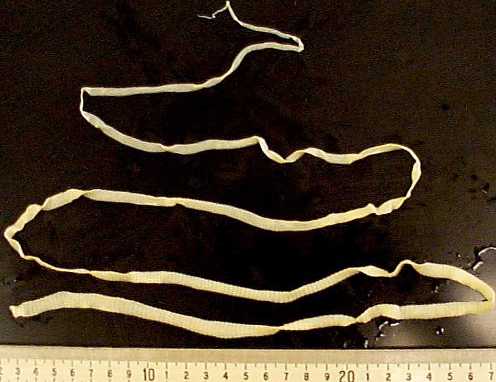
The main groups we contend with are tapeworms, round worms, hookworms and pin worms. A tapeworm may be harboured with little or no ill-effects, until it drops as a strap from the anus and is felt flapping between the thighs! Competition for nutrients can be serious however causing severe protein-energy malnutrition (PEM) and iron depletion. This is turn leads to immune malfunction. The fish tapeworm Diphyllobothrium latum has a high affinity for vitamin B12 and may so deplete supplies for the host that he or she develops debilitating anaemia. Generally in clinical ecology we meet with less extreme forms of parasite infestation; but micronutrient deficiency (vitamin and mineral depletion) is usual and impairs the immune system’s ability to throw out the intruder.
Trichinella
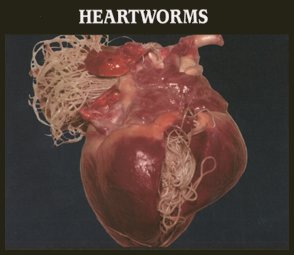
Trichinella is related to the whipworm already mentioned. It is one of the smallest nematode worms to infest humans and yet is arguably one of the most widespread and clinically important parasites in the world. The male is around 1.5 mm, the female twice as long. Once ingested, the sexes copulate and release juveniles, which then migrate throughout the body. No tissues are free of infestation, including lungs, brain, heart and kidneys. Fatal myocarditis can result.
But once again the usual clinical picture is that of low-grade grumbling disease, that can mimic all levels of environmental illness, including allergy and overload symptoms, per target organ. The original invasion may be dismissed as "food poisoning" (nausea, abdominal pains, sweating and diarrhea). During the phase of tissue-migration any of a host of symptoms may develop, from pericarditis, pneumomnia and meningitis to peritonitis, encephalitis and severe inflammatory reaction (Schmidt GD, Roberts LS, Foundations of Parasitology, Times Mirror/Mosby College Publishing, St. Louis, 1989, p. 424). Trichinella therefore often goes un-diagnosed and the patient remains unwell for years or even life. The worms may die in situ and all that remains of their presence is calcified nodules in muscle and organs.
Unfortunately, there is no treatment for Trichinella, beyond good immune care and unburdening, as described in this book. Homotoxicology adds vital degrees of resistance and may, alone, be sufficient to dislodge this parasite.
Parasites therefore become part of the clinical ecology picture. Remember, ecology means our relationship with the outside environment. This is not a sick body problem but a healthy body being damaged by extraneous factors. Parasites are just another type of body burden, an important one at that.
The study of parasitology is a vast and growing subject, requiring a considerable textbook to introduce merely the basics. Here we shall select some of the common pathogens found in Western society and which may mimic or cross-over with allergy, nutritional and environmental disease. Astute physicians will be alert to their ever-present menace and realize that the majority of cases appear as chronic smoldering ill-health and not the dramatic unmistakable picture of the full-blown infestation.
Remember also that parasites, even when present in significant numbers, may not be the sole cause of the patient’s problems but merely a contributive overload factor.
Reasons to suspect parasites: Tiredness, listless, loss of appetite, irritability, insomnia, vague aches and pains (not confined to bowel), swings in bowel habit, flatulence, inappropriate hunger, skin rashes, itching anus, itching ears.
Note that hookworm disease was the cause of one third of all deaths in Puerto Rico early in the 20th century, yet fewer than 25 worms will cause no symptoms; 25- 100 worms will produce only "light symptoms"; 500- 1000 considerable damage but only "moderate" symptoms. If you are thinking you could be harbouring a bunch of these critters and you would not know, you are correct. (Schmidt GD, Roberts LS, Foundations of Parasitology, Times Mirror/Mosby College Publishing, St. Louis, 1989, p. 440).
Mental States
Sensation of floating (feeling ‘spaced out’, ‘unreal’ or ‘distant’)
- Difficulty with memory
- Difficulty concentrating
- Mental confusion (‘racing thoughts’)
- Tension
- Anxiety
- Panic attacks
- Fear of crowds, shops, queues, stuffy places, artificial lights, lifts, trains, underground trains, etc. Feel physically ill, tight-chested, prone to collapse when faced by the above situation
- Temporary delusion
- Seeing things that are not there (hallucination)
- Quick temper
- Quick/easy tears
- Coma, stupor or convulsions-if hyperventilation is severe
Sleep
- Vivid/frightening dreams
- Waking in morning feeling ‘drugged’/headachy/fatigued/lethargic/with aching muscles
- Waking in the night choking/breathless/panicky
- Waking repeatedly soon after going to sleep
Eyes
- Blurred or double vision
- Distortion of perspective (‘the room tilts away’)
- Sensitivity to bright lights
Ears
- Vertigo (dizziness)
- Tinnitus (ringing/buzzing in ears) which varies from hour to hour
- Sounds seem distant or unusually loud
- Sensitivity to loud noises
Nervous System
- Lack of co-ordination/bumping into things/clumsiness ‘Tension headache/thick head/hangover-like state for large part of many days
- Headache during ‘attacks’/caused by exercise
- Migraine attacks
- Numbness/’deadness’/tingling in extremities, limbs, lips, face, tongue
- Feeling ‘electric’ – but not the electric shock one can get by making contact with an object
- Unpleasant sensations in skin/just below surface of the skin
- Cold/burning/aching/ ‘creeping’ feeling, commonly in the thighs/buttocks/ feet but maybe other parts of body
Autonomic Nervous System
- Emotional sweating/sweaty palms/armpits
- Easily blushing or going very pale
- Cold hands/feet (when rest of body is warm)
- Raynaud’s disease
Respiratory System
- Unreasonable breathlessness/air hunger/feeling of restricted chest
- ‘I do exercises to improve my breathing’
- ‘I do not breathe enough/breathe deeply enough’
- ‘Sometimes I stop breathing/have to remember to breath’
- Frequent sighs/yawns
- Cigarette smoke provokes other symptoms listed on this chart
- Singing voice becomes off-key/tuneless/husky
- Speaking/singing loudly provokes symptoms listed on this chart
- Speaking voice goes husky/feels strained
- Throat dry/’rough’/sore
- Asthma attacks now/in the past
Heart
- Rapid, slow or irregular heartbeat
- Blood-pressure changes easily
- Dull pain/ache in center of chest
- Angina/ coronary pain, but medical investigations prove negative
- Profound/ frequent fainting spells
Muscles
- Weakness/fatigue
- Exercise has to stop due to sudden unreasonable exhaustion
- Sudden loss of strength
- Hard exercise improves symptoms
- Muscles feel stiff or ‘in spasm’
- Muscles ache (feeling ‘beaten up’ or as if ‘been in a fight’)
- Tense jaw muscles (may cause headache)
- Muscle tremors
- Muscle twitching
- Tightness around eyes/mouth
Throat
- Globus (sensation of pressure or lump in throat or at root of neck)
- Sensation of restricted throat
- Difficulty swallowing
Gastrointestinal System
- Excessive belching, swallowing air
- Discomfort/tension/sinking feeling/distress just below tip of breast-bone
- Distended stomach
- During attacks of other symptoms: urgent/uncontrolled bowel movement
Urinary Tract
- Frequent need to pass urine
- Discomfort at neck of bladder
- Severe urge to pass urine/incontinence, when accompanied by any of the other symptoms in this table
Reproductive System
- Orgasm during cult activities (‘unusual’ sexual practices)
- Premature ejaculation
- Sex provoking prolonged exhaustion
- Sex improving all symptoms for a few hours
Pinworms (threadworms)
Pinworms(threadworms) are unusual in not being more prevalent in the tropics. Rather they thrive in temperate climates and often at surprisingly high socio-economic levels. Whites are more susceptible than blacks. At least 500 million people are infected with this pest.
Pinworms are often asymptomatic, until they reach large numbers. Most symptoms are centred on the bowel and include cramps and mild bleeding. Serious damage to the gut lining is yet another cause of leaky gut syndrome. Itching anus may call attention to the unwelcome guests, which may also reach the vulva and even vagina and uterus, setting up sites of bacterial infection.
Children with heavy pinworm infestations are often nervous, restless and irritable and may suffer loss of appetite, nightmares, insomnia and weight loss.
Pinworms and their eggs may be identified by inspecting the anus or bowel movements. An infection usually is easy to treat with medication.
The American Academy of Family Physicians offers the following suggestions to help prevent pinworm infection:
- Always have your child wash hands before eating, and after going to the restroom.
- Trim your child's fingernails frequently.
- Don't allow your child to bite his or her fingernails.
- Have your child put on a fresh pair of underwear each day.
- Bathe your child in the morning instead of at night, which will help prevent the spread of eggs laid during the night.
- Since pinworm eggs react negatively to sunlight, open curtains in your child's room each day.
- After your child has been treated for pinworms, put your child in clean underwear, sleepwear and bed linens.
|
What Puts Us At Risk?
Animals can pass parasites on to humans. Children should not kiss or be kissed or licked by pets. This is a very easy pathway for parasites to enter the human body. Keep infants and toddlers away from petsthat have not been wormed. Hands should be washed after each andevery contact with a pet, otherwise one is putting self at seriousrisk.
Am I saying do away with loving pets? No! We all love our pets,but we must be practical and wise also. I have two cats and love them dearly. However, I am wise about their care. Animals that are strictly indoor animals and that do not come into contact with the outdoors are a much lesser risk, but still a risk. Animals that come and go from the outdoors into the home pose a serious risk, especially to children. Cats and dogs for example clean their anus with their tongues. If they lick you, they are transfering parasites to your skin. If they lick your face, it does not take long for the parasite to find its way into your mouth and your intestine.
Toxoplasmosis and is usually acquired from cats. A small stratch from a cat or dog can also transmit the parasite. Cats use a cat box. They are moving around feces and urine that has been prior deposited in the cat box. This dirt that has parasites. Cat boxes should be scooped daily and throughly bleached and washed on a weekly basis. Make sure you use gloves, put two pair on when doing this. Use HOT water with the bleach. If you do this is in a bathtub, make sure you bleach and disinfect the bathtub afterwards to kill any bacteria or parasites. Its' best to clean the box outside. Mechanical cat boxes are a breeding ground for bacteria and parasites because you cannot easily disinfect them.
Dogs are no different because they also lick their anus. If you have a pet that is stratching its' behind on your carpet, you better get that pet to a vet to get wormed. You should also steam clean, at least three times a year, your carpet. Parasites can be transmitted to carpets from shoes and animals. Never walk barefoot on carpet, especially near doors. Cats should definitely be kept away from new borns and infants less than three year olds. A parent that gets thatsweet little kitty for their one year old is playing Russian roulette with their child's life. Parasites can exist on the fur as well. Indoor animals should be bathed regularly just like animals, twice a month, at least! And if it is an outdoor animal that comes indoors, do not let the animal lay on furniture, you are only inviting health problems.
You may think this is taking things to an extreme, but believe me, these deadly little parasites are on those dear loving pets of ours. If you practice these recommendations, you will find you will have less health problems. Do not under any circumstance, give your pet raw meat of any kind. You are providing the means for a parasite infection in the pet which can easily be transmitted to humans, especially children. Do not let your children play in areas where animals have
defecated without spraying the area with bleach.
Animal feces should be picked up using a shovel daily and gloves
should always be worn and hands washed throughly after any yard work.
Wear a air filter mask while you do this if they area is dusty. The
dust you breathe in will contain parasites. By the way, any garden
work, always wear gloves. There are over 100 different parasites
in soil that can be transmitted from the soil. Never work in soil
if you have a cut on your hands. The little critters will get into
your bloodstream via the cut. Do not flush cat box liter down the
toliet. The parasites can cling to the bowl and crawl up to the seat.
Once on the seat, they find their way into you. If you see rice like
particles coming out in animal feces, they have worms or parasites.
Fleas are carriers of tapeworms. Recently a woman in New Jersey
had severe lower colon pains and severe blaoting. This went on for
several months. She had two dogs in her house that she let outside
every day. Several months after trying to cope with the colon pains,
she then developed rashes and itching. Nine months later, they found
through exploratory surgery, a large 3 and 1/2 foot tape worm inside
her and several smaller ones. Upon investigation at her house, fleas
were found in the carpet. Do not walk barefoot around animals unless
they are strictly an indoor animal.
Diagnosis and treatments of worms
Diagnosis rests on viewing eggs, cysts, juveniles or other characteristic
forms of the pathogen in stool or other specimens (eg. sputum). Pin
worms and eggs can often be collected live by using cellotape applied
to the anal margins. Biopsy may be required for species like Giardia.
The parasite laboratory I recommend is Dr Omar Amin in Phoenix.
Phone (480) 767-2522. Website: www.parasitetesting.com
The eosinophil count is often very high (a type of white blood cell
associated with allergic reactions to parasites). Monoclonal antibody
tests and/or ELISA tests can help but this requires guesswork as
to the nature of the beast.
Good EAV specialists may be able to identify parasites but on no
account embark on an expensive or distressing parasite cleanse unless
you are sure the practitioner is good. Many are not reliable.
Drug treatments have unpleasant side-effects, which are worse in
children and the elderly. These include nausea, vomiting, colic,
diarrhoea, allergic reactions including urticaria, bronchospasm,
angioedema, dizziness, muscular incoordination (worm wobble); drowsiness
and confusion. Care is needed administering anti-parssitics to patients
with poor kidney function and liver disease. Some (piperazine) may
make neurological conditions worse. A second dose is usually required,
to hit those organisms which survived the first dose or were hidden
too deep in the tissues.
Simplified worm treatment table
PARASITE |
TREATMENT |
Pinworms |
Mebendazole, Piperazine |
Round
worms (Ascaris etc.) |
Levamisole, Mebenadazole |
Hook
worms |
Mebendazole |
Strongyloides |
Thiabendazole, Albendazole |
Tape
worms |
Niclosamide, Praziquantel |
Trichinella |
None |
It may be necessary to treat all members of the household simultaneously.
Pinworms eggs are light and become airborne; they may be inhaled.
Cleaning of carpets, towels and bed linen etc. is therefore recommended.
In all cases improvements in hygiene standards are demanded, to reduce
the pool of re-infection.
General Points Of Treatment of Parasites
Drugs should not be considered the only means of attacking parasites.
Indeed, this approach is a last resort. Re-building the body’s
defence mechanisms, to allow it to expel the host naturally, is the
preferred route. This will help to prevent re-infestation which drugs,
of course, do not do.
With this in mind, there are general principles of de-infestation
of parasites which must be applied in the clinical ecology situation:
Firstly, never attempt to eliminate a parasite
without a major change in diet. Sugar and refined carbohydrates,
which are rapidly split to energy giving glucose, favour the parasite
and hamper your immune system(tests have shown that a single sugary
drink, such as a cola, stuns the leukocytes for up to six hours,
before they can resume normal anti-pathogen activity).
Accordingly, remove all refined carbohydrate (and this means all
manufactured foods) from your diet. It is better, short-term, to
also omit fruits and fruit juice, since these too are rapidly split.
Avoid wheat and dairy products short-term, since these are common
stressors. Finally, omit coffee, tea and alcohol. Eat instead high
roughage foods, vegetables, salads, beans and whole non-wheat grains
(if you are not allergic to them). Fowl, meat and fish are fine in
this context. Sprouted seed and beans also help, with active enzymes.
Add good vitamin and mineral supplementation, to help your immune
system; this will not support the parasite, which has already grabbed
its share, without you knowing.
Secondly, prepare with a bowel cleanse
The theory is that it is hard to hit parasites if the bowel is full
of accretions. Well, the model may or may not be correct but in clinical
situations the cure seems to work better if you apply this principle.
You need to take a gentle laxative over a period and get the bowel
emptying on a regular basis.
The one I recommend is NATURAL BALANCE discussed elsewhere on this
website. It consists of Fennel Seed, Psyllium Seed Husk, Rhubarb
Root, Peppermint Leaves, Black Seed, Cumin Seed, Cinnamon Stick,
Ginger Root. It is a 100 year old recipe from an ancient Lebanon
household which helps to cleanse the colon, liver and other digestive
organs, breaking down and removing old putrefactive faecal build
up in the large and small intestines. The programme is gentle yet
very purgative. Taken regularly it accelerates the cleansing process
and helps keep the intestinal system in a state of internal hygiene.
Natural Balance cleanses and re-educates the muscle tone and helps
return healthy peristaltic action to the colon. The fibre in Natural
Balance also helps eliminate heavy metals, toxins and other poisons
from the body’s cells.
Considered to be ‘colonics in a capsule’, Natural Balance
is a safe alternative to colonic irrigation and is vital for anyone
embarking on an anti-parasite or an anti-Candida programme. Although
Natural Balance can be used on its own as an exceptional detox, anyone
wanting to use herbs to eliminate parasites should start by using
Natural Balance as a primary cleanse.
Follow Natural Balance with Natural Cleanse:
Here's a note by expert Graeme Delglyn from the UK
Natural Cleanse (60 capsules) £22.95
Ingredients: Green Hull Black Walnut (husks), (Juglans regia L.)
Cloves (flower) (Eugenia caryophyllata), Pumpkin Seed (Cucurbita
pepo L.), Gentian Root (Gentiana Lutea L.), Hyssop (leaves) (Hyssopus
officinalis L.), Black Seed (Nigella sativa), Wild Peppermint Leaves
(Mentha x piperita), Thyme Leaf (Thymus Vulgaris L.), Fennel Seed
(Foeniculum vulgare), Grapefruit Seed (Citrus paradise Macf.),
Oregano (Origanum vulgare).
A 500 year old recipe, Natural Cleanse is known to help the body
rid itself of health-destroying parasites. It also has strong anti-fungal
properties and is used to assist with the elimination of moulds,
fungi and yeasts, including candida albicans. Acting as a scavenger
in the bloodstream, Natural Cleanse uses taste, texture and heat
to create an inhospitable environment for parasites to exist. This
explains its broad spectrum application for the many different parasite
groups. Natural Cleanse is recommended over a minimum four month
period in order to catch parasites in all their stages of development.
It is a safe programme for adults, children and animals.
To order Natural Cleanse and Natural Balance go to www.resourcesforlife.net
Thirdly, many plant sources are anti-parasitic.
Aspidium (male fern) or Felix mas, the great fern was once a standard
treatment but is now considered far too toxic.
Best known as an antiparasitic is Artemesia annua. It is currently
under study by the World Health Organization as a possible treatment
for chloroquine-resistant malaria. Activity is thought to be due
to an alkaloid with the Chinese name of qinghaosu. A. annua is available
as a bowel preparation take 1 g three times a day for 60 to 90 days.
Better results may come from combining it with some other herbs.
Grapefruit-seed extract, known under several brand names such as
DF100, Parcan and Citrocidal (100 mg three time a day) has a similar
range of activity. The two combine very well. If a short-term course
of metronidazole 400 mgm twice or three times a day, is added, this
makes up just about the best ammunition we have got.
Even then, there is no guaranteed cure. Relapses may occur and life-long
maintenance therapy may have to be considered.
Other herbs with useful antiparasitic properties to be considered
include the following:
- Extract of fresh pumpkin (Curcubita species)
- Grapefruit-seed extract (Citricidal, DF100, Parcan)
- Artemisia absinthum (wormwood)
- Artemisia vulgaris (mugwort)
- Black walnut husk (collected while green)
- Oil of cloves
|
The above list of compounds can be combined in many ways, to produce
differing proprietary formulas. Just make sure you know what you
are buying and how to take it effectively.
You may need a strong stomach in the metaphorical as well as physiological
sense. Treatments often lead to coughing up live worms or parts and
seeing a flush of dead worms in your stool is only slightly less
horrifying. Be warned!
Fourthly, it makes no sense to try and eliminate parasites, unless
you take steps to prevent recurrence.
Parasites are often contacted through unhygienic habits. However
many, such as hook worms and pin worms, can pass through the unbroken
skin. Merely touching something that has been handled by a parasite
victim could pass it onto you or your family. There is absolutely
no point in feeling ashamed or trying to pretend it couldn’t
happen to you. Just face facts and get to work on an effective cleansing
programme. Before or while you take the anti-parasitic remedy, whether
allopathic or herbal, consider sources of infection:
People may infect each other in a "ping pong" fashion.
Treat everyone in the household at once.
Remember pets are the main source of human infestations. Worm your
pets regularly and never allow a pet to lick your face around the
mouth.
Always wash your hands thoroughly before handling raw food (salads
etc). Never taste uncooked foods, even one lick can produce fatal
Trichinella (if you are very very unlucky, that is)
Cook all meat products thoroughly. If you have a predilection for
rare-cooked steak and pork etc. YOU MUST FREEZE IT FOR A MINIMUM
OF 20 DAYS. This will kill the tapeworm scolex. Remember offal is
just as dangerous as muscle meat.
Fifthly, as well as cleaning up your outer environment, change your
inner terrain to make it very hostile for parasites. I am talking
now about homotoxicology. This means to cleanse your tissues and
remove toxins, so that the body’s nutrition and defence systems
work well.
Homotoxicology and parasites
If you have not already visited the homotoxicology section, do so
now, to gain a general understanding of this remarkable advance in
detoxing and fortifying body defense mechanisms.
Homotoxicology is really about terrain. It is about the physiology
and function of your body. When it is healthy and functioning well,
it is death to a parasite to walk in your front door! Your immune
system will attack it and the system we call the mesenchyme matrix
will make it absolute hell for the parasite to set up home.
Parasites are what we call "opportunists", meaning they
move in when there is trouble in the neighborhood. They are rarely
the cause of the trouble but the result of trouble. That is where
allopathic medicine gets it wrong yet again. Your body health and
defence mechanisms have already failed in protecting you by the time
you get a parasite installed. The main road back then is to change
your body terrain back to how it should be. Nutrition is paramount,
removing food allergens which stress up the system helps, chemical
detox helps, taking plant-based anti-parasite remedies undoubtedly
helps.
Now you must put your attention on de-polluting the lake of intracelleular
fluids which bathes and nurture our cells and tissues, as explained
in the section on page 000. Consider the function of the following
remedies:
Echinacea compositum (HEEL or BHI). This is not an Echincaea herbal
product but a fortified homeopathic version, which is much more powerful.
It contains, among a total of 26 remedies in the mixture: Echinacea,
aconite, sanguinarea, Lachesis, Bryonia, Pulsatilla, Influenzinum-nosode,
strepto-coccus nosode, staphylococcus-nosode, arnica and argentum
nitricum. It is designed to fortify the immune system in over a dozen
different ways, herbal, mineral and detoxers (nosodes).
Lymphomyosot (also HEEL or BHI). Been well studied scientifically
in hospital trials. This cleans out the lymphatic system, which is
a major de-tox pathway totally ignored by allopathic doctors, unless
it becomes completely blocked by worms (filiariasis). Lymphomyosot
strikes at the toxic residues lingering in the body from past illnesses,
such as influenza and childhood fevers. A must on an anti-parasitic
programme, for the first 6 weeks.
Hepar compositum (HEEL and BHI). Vital liver support, including
well-known liver herbs such as milk-thistle, Peruvian bark and chelidonium.
But also healthy liver potentized, thymus gland extract, gall-bladder
and histamine. This remarkable proprietary product also includes
intermediates from the Kreb’s or citric acid cycle, which drives
the body’s energy system. I have to point out over and over
that cells with poor mitochondrial energy function cannot detox easily;
it takes a lot of energy to push out poisons!
Liver support if this kind is absolutely vital for protecting the
liver from damage by parasites.
Tanacet (Tansy) is a traditional antiworm treatment for tics, nervous
irritability and restlessness in children, here potentized to make
a homeopathic compound with Artemisia vulgaris, Artemisia absinthum
and wild thyme and goosefoot to protect the liver.
Schwef-Heel is from the same stable and contains 5 different potencies
of sulphur. Older readers will remember rhubarb and soda as a worming
mix in country practice up until the end of World War 11.
Traumeel is another good choice. Apart from being soothing to inflamed
tissues it has a strong sulphurous property.
Nux vomica is another good choice to settle the bowel disturbance
of shedding worms and flukes. I like to give it as a range of potencies
called a chord (D12, D30 and D200).
More general advice on rebuilding health through deep tissue cleansing
is given in the body stuff section on homotoxicology.
A historical note on the guinea worm
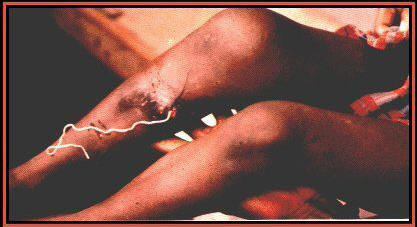
A fearsome parasite, the guinea worm, uses a human host. It
migrates under the skin where it is quite visible, wriggling,
and can grow to many feet in length, causing great pain and
damage. The traditional way to get rid of these worms is to
grab one end through a cut in the skin and wrap it round a
stick; by winding the stick over a period of days, the worm
is gradually drawn out.
The reader may know that the traditional symbol for a doctor
is the serpent wound round a stick. This has always been supposed
to be a snake but a more serious suggestion is that the creature
is the guinea worm and the sign of a healer is a man who can
get rid of this burdensome pest! I go along with this suggestion.
It would also make good sense of a quote from the Bible, concerning
the Israelites on their migration back from Egypt: "And
the Lord sent fiery serpents among the people, and they bit
the people; and much people of Israel died.. And the Lord said
unto Moses, ‘Make thee a fiery serpent and set it upon
a pole; and it shall come to pass that everyone that is bitten,
when he looketh upon it, shall live’." NUMBERS
21:6
The rod of Aesculapius, symbol of the physician.
Does the "serpent" really depict the
guinea worm (Dracunculus medinensis)?
|
Other worms and flukes
It need hardly be said that this list is not comprehensive and contains
an overview of only the main worms that infest humans. Other important
parasite groups include the flukes and amebas, which again flourish
in the nutritionally compromised or immune deficient patients, such
as has AIDS or environmental overload.
AMEBAS (amoebas). Entamoeba Histolytica
This well-know tropical protozoan infection is surprisingly widespread
in temperate zone (as high as 5 per cent of the population in the
US). People are largely symptom-free because they are healthy and
well-nourished – it is probably responsible for a lot of chronic
mild complaints but goes undiagnozed. 'Carriers' may exceed 50 per
cent of the population in poorly sanitized areas.
E. histolytica probably only attains its killer dysentery form in
an immune-compromised host. There seem to be some strains more virulent
than others. Except in these special cases the dangerous spread to
the liver and brain, causing amoebic abscesses, is very rare.
Diagnosis of ameba
Stools are characteristic and may show specks of blood. The organism
or its cysts can be found on microscopy. Serological tests are almost
always positive when the disease is present, but since antibody levels
stay high long after infection this isn't a good guide to current
disease.
Immunofluorescent techniques are better.
OTHER SUSPECTS AS PARASITES
There are many other such organisms and the list is growing constantly.
Blastocystis hominis is an example. This organism was formerly considered
to be a yeast but is now re-classified as a protozoan. Its frequent
pleomorphic forms (odd, changing shapes) make diagnosis exasperatingly
difficult. Endolymax nana is another type of ameba. Formerly thought
to be nonpathogenic, it is now realized that it may be, given a weakened
host. It is often present with other organisms. It may be associated
with inflammatory arthritis. Dientamoeba is still considered an amoeba
by most parasitologists.
It is quite common to find these organisms but care must be taken
not to presume that its presence is pathogenic. Even if one is flourishing,
the real problem still lies with the host susceptibility.
***
It remains to consider three other important human pathogens that
are a common part of environmental illness and cross-over with allergy
and overload. These are Gardia, Toxoplasma and Cryptosporidia species.
Giardia and Cryptosporidia are notorious in that they both by-pass
normal water treatment and filtration systems.
GIARDIASIS (Giardia lamblia and G. Intestinalis)
It is now realized that as many as 15 per cent of us may be carrying
Giardia, a minute flagellated protozoan that causes severe fatigue
and bowel disturbance. That's 1 in 6 of the population. Prevalence
is high throughout the tropics; modern travel has spread it to more
temperate zones. It is an important cause of traveller's diarrhoea
and chronic fatigue states. Patients with irritable bowel or 'food
allergy' can often due the onset of their symptoms to an episode
of tummy upset on a holiday abroad.
A single Giardia cyst can cause infection, and studies show 100%
infection with exposure to only 10 cysts. By contrast, most bacterial
illnesses require hundreds to thousands of organisms to produce illness.
Giardia causes as much as 25% of all diarrhea cases in North America,
making it the most common non-bacterial cause of diarrhea.
Person-to-person spread is more common in day nurseries, residential
institutions and between male homosexuals. It exists in a free swimming
form and as a cyst, the latter being the form in which it is transmitted.
Symptom-free carrier states are common. These individuals may pass
on the infection while being unaware that they are carrying it.
Typical symptoms other than diarrhea include nausea, anorexia, abdominal
discomfort and distension. Severe malabsorption may occur, not unlike
the changes of celiac disease, from mild to total atrophy of the
gut lining. Stools may be bulky, float and stick to the pan (steatorrhoea).
If the illness is prolonged, weight loss can be quite pronounced.
It is common for patients with Giardiasis to have secondary deficiency
of the enzyme lactase and they may also fail to absorb folic acid
and vitamin B12, leading to anaemia.
Diagnosis of gardia
Detecting Giardiasis is very difficult. Most labs do not have the
requisite detection skills. The 'gold standard' for giardia is jejunal
biopsy, where a capsule is passed through the stomach and a small
specimen of mucous epithelium is sampled. The parasite is visible
with microscopy. Unfortunately this test is rarely carried out.
Routine hospital screening of feces for the presence of cysts misses
the diagnosis 98 per cent of the time. A newer and probably better
method, described by the researchers Bueno and Parrish in the US,
consists of a superficial biopsy of rectal mucosa taken by means
of small cotton bud swab pressed firmly into the mucosal lining.
The specimen is centrifuged and examined immediately under a microscope
or, if this is not possible, it is held in an incubator at 98.6° F/37° C
until ready. A positive result would include visualization of the
protozoa, which are actively mobile for up to 24 hours. Cysts may
also be present and can be recognized by their form.
Treatment of gardia
Originally mepacrine, an anti-malarial drug, was used. Co-trimoxazole
(a combination of sulphonamide and trimethoprim, also known as Septrin)
and metronidazole (Flagyl) have been the most widely used drugs to
date. Unfortunately the relapse rate is very high and treatment may
need to be repeated, showing that the organism was not eradicated
properly in the first place.
Tinidazole (Fasigyn) has become available and appears
to be effective. It may cause short-lived abdominal discomfort and
drowsiness. The usual dose is 2 g as 4 tablets taken on a single
occasion. Treatment should be avoided if the patient is pregnant
or breastfeeding; patients may feel ill if they consume alcohol concurrently
with the treatment.
Alinia (nitazoxanide) for a whole range of parasites.
In his definitive study, Dr. Stuppy MD, of Los Angeles, found one treatment, above all others, was over 98% effective against all the above listed pathogens. That was Alinia (generic nitazoxanide). In fact his hit rate was as follows:
- Cryptosporidium parvum, reduced by 99%,
- Amoeba histolytica, down by 100%,
- Giadria lamblia, 98%
- Blastocystis hominis, 96%
- Ascaris lumbricoides, 90% (difficult one, that)
- Clostridium difficile, down 100%,
- T. solium, 100%
- T. spiralis, 100%
Nitazoxanide is highly effective in treating/eradicating gastrointestinal pathogens; this includes parasites, helminths, protozoa, and pathologic bacteria.
Alinia is available on prescription in the US (around $18 a capsule) but I feel bound to point out you can get the generic compound (nitazoxanide) in Mexico far cheaper!
The dosage Dr. Stuppy used was 1 gram, twice daily, for two weeks. This is heavy medication.
Once cleared, I suggest readers consider using it rather differently, as a “worming pill,” just like we do for cats and dogs. Take 1 gram, twice a day, for three days. Repeat every six months. But don’t forget to fix the terrain, otherwise parasites will all come back!
TOXOPLASMOSIS
Toxoplasmosis is an infection caused by Toxoplasma gondii, an intracellular
protozoan which requires for its life cycle a definitive host such
as a cat, sheep or pig and an intermediate host, e.g., a human. Infection
of humans occurs either congenitally (passed on from the mother)
or by ingestion of foods contaminated by infected cat, lamb or pork
feces, or by eating lamb or pork contaminated with T. gondii cysts.
Toxoplasmosis is endemic in Europe, where most people carry it.
It is also endemic in the southern US. The chances are high you are
carrying in in your brains!
Five major clinical forms are recognized:
- A mild asymptomatic form with only swollen lymph glands which
is occasionally found by chance.
- A more severe disturbance with swelling of lymph nodes and a
mild fever. This is the form that can mimic ME or infectious mononucleosis
(Epstein-Barr Virus) but the Paul-Bunnell test for the latter will
be negative and remain negative.
- Neurological abnormalities which include neck stiffness and headache,
sore throat and rashes. The cerebral spinal fluid has a raised pressure
and its protein level is elevated. This means the brain has been
heavily invaded.
- An acute febrile illness with widespread rash, swollen liver
and spleen. The complications of this form include inflammations
of the eye, the myocardium and the liver. The latter tow forms are
more common in those with a poor immune system, such as AIDS sufferers.
- Congenital toxoplasmosis, which often leads to mental retardation,
epilepsy and even spasticity or paralysis.
Diagnosis
Diagnosis is made chiefly from serological tests for IgG antibodies
to T. gondii. Other antibody tests include indirect fluorescence
or haemagglutionation. Raised antibody levels are not rare in the
general population, and only an increasing level is suggestive of
active toxoplasmosis.
Treatment
Most patients require no therapy as the disease is mild. Good general
measures as described above will be sufficient to shrug it off. For
those with the more severe form, pyrimethamine (25 to 50 mg three
times day) and sulphadiazine (4 to 5g daily) are used in combination.
Therapy needs to be continued for at least one month. Since pyrimethamine
causes fetal abnormalities it should not be used during pregnancy
or if a woman might be pregnant. Steroids are occasionally used to
dampen down any inflammation in the eye.
Prevention is better than cure. Domestic cats that kill mice and
birds are the chief source of infection and strict codes of hygiene
should always be observed around pets.
CRYPTOSPORIDIA
In the last decade, Cryptosporidia species have become recognized
as one of the most frequent causes of acute gastroenteritis caused
by a parasite. Cryptosporidium is a spherical, single-celled protozoa
found in contaminated water and foods. It occurs as spherical cysts
about 4 to 6 microns in diameter. It is not killed by water chlorination.
According to the Food and Drug Administration (FDA), ingesting 137
cysts infects 50% of the people exposed, and ingesting 300 cysts
infects 66%.
It is common in farm workers but affects the population generally.
Surveys indicate that about 2% of the population in North America
are infected and 80% have had cryptosporidiosis at one time or another.
Six species are known which infect mammals, birds, reptiles, fish
and humans. C. parvum is the major species responsible for clinical
disease in humans and domestic animals. Transmission is direct transfer
(fecal-oral route). That is to say, cysts are excreted in the feces
and, due to inadequate hygiene, eventually find their way into the
mouth of uninfected hosts.
Usually cryptosporidiosis is a mild self-limiting attack which lasts
no more than a few weeks. Immune-compromised patients, with allergies
and chemical overload as much more at risk and infection may linger
to become on of the many causes of chronic fatigue. But it is particularly
disastrous for AIDS victims who cannot fight it off and suffer a
severe life-threatening diarrhea with dehydration. Secondary symptoms
include fatigue, headache, joint pains and general debility. The
antibody response to Cryptosporidia may interfere with treatments
being attempted, such as enzyme potentiated desensitization or Miller's method.
Cryptosporidiosis Treatment
Alinia (see above) is now the treatment of choice for cryptosporidia infections.
The general defense
measures above are the best approach to ridding one’s self
of the problem.
Because many cities are unable completely remove Giardia and Cryptosporidia
cysts from their water supplies, even drinking water direct from
the faucet may be infected. In fact, cysts have been found in most
major municipal water supplies in the United States, and more than
63% of water problems in the United States may be caused by Giardia
and Cryptosporidia. Milwaukee had a huge Cryptosporidia outbreak
in 1993 that infected half a million people and resulted in 100 deaths.
- Prevention is much more effective than treatment.
- drink only filtered water outdoors
- avoid swallowing water when swimming in lakes, ponds, and
rivers
- avoid drinking unpasteurized milk and cider
- wash your hands, especially after exposure to diapers and
livestock
- if you are at risk, add thoroughly washing all fruits and
vegetables
|
Join Me
|